Let’s continue a bit more with the passage from the previous article.
What, after all, is Apollos? And what is Paul? Only servants, through whom you came to believe—as the Lord has assigned to each his task. I planted the seed, Apollos watered it, but God has been making it grow. So neither the one who plants nor the one who waters is anything, but only God, who makes things grow. The one who plants and the one who waters have one purpose, and they will each be rewarded according to their own labor. For we are co-workers in God’s service; you are God’s field, God’s building.
1 Corinthians 3:5-9 NIV
https://bible.com/bible/111/1co.3.5-9.NIV
The second way (after doing what God told them to do) that these evangelists / pastors / preachers / teachers fulfill their role is to be like farmers, just growing disciples rather than crops. As you might imagine, people in the first century would be quite aware of how things are sown, cultivated, cared for, and harvested. Like when Jesus invited disciples to become “fishers of men (see Matthew 4:18-19, Mark 1:16-17, Luke 5:9-10), the audience also knew this topic well.
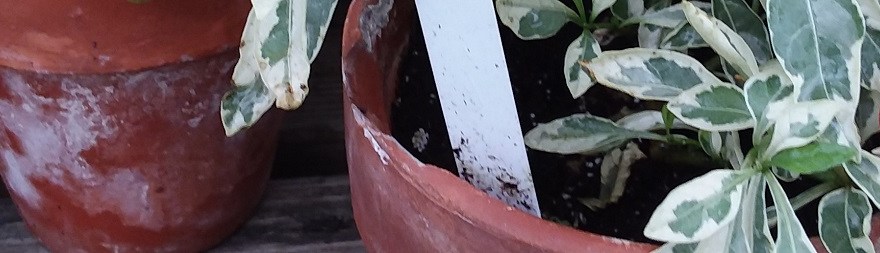
In our house (because my wife is a self-proclaimed “plant lady”), the requirements for growing plants are particularly obvious:
- Seed packets are out on the counter before being planted.
- Cuttings sit in water by the kitchen sink, developing until they are ready to be potted.
- Signs placed in dirt show that seeds have been planted there.
- Sometimes, as plants get potted or transplanted, the kitchen counter has dirt on it, rather than cooking utensils or the family’s junk that seems to pile up. (Of course, the counter gets cleaned off between uses, just in case you ever stop by our house for dinner.)
- The plant light sits in the corner of a key room of the house, starting tomatoes and other plants early in the season. And, an alarm goes off each evening to indicate when other plant lights should be switched off.
- Watering cans appear around the house, and my wife can often be seen using them.
- Plant stands get priority near every window on key sides of the house.
- There’s a steady trail of supplies going into and out of the greenhouse.
- Fortresses of wood, wire, and netting protect plants in the gardens (outside of the relative safety of the greenhouse) from animals.
- And, when my wife is away for a day or two, the family gets a specific list of what to water (and, that’s by our request, since we don’t know what needs to be done).
No matter how much effort my wife puts into growing plants, though, she would never tell you that she actually causes the plants to grow. She knows that, 1) she didn’t design the DNA of the seeds that she plants, 2) she didn’t make the sun that provides the energy for the plants to grow and, 3) she doesn’t fabricate the new cells that make up the plants. Instead, she can only help in the process.
In the same way, when we or another Christian grows spiritually, that may be enabled by actions of Christians, but we really can’t take credit for the result.
- We can’t always create the right circumstances – or realize when the right time is – for a person to be ready to hear God’s message.
- We don’t always know the right thing to say without the Holy Spirit’s help.
- And, we didn’t create human beings in the first place, each having a soul and a need for God in their hearts.
However, like good “disciple cultivators”, we can certainly be part of the process and do things that we know are good for making disciples, just like farmers do things that they know help plants to grow. For instance, we can teach others, invite people to church, pray with them, answer their questions, testify about God’s impact in our lives, worship and praise Him, welcome people into the family of God, listen to others’ problems, sit with them when they hurt, provide for their needs, visit them (whether at home or in the hospital – or even in jail), or just offer a hug.
And, we can cultivate our own souls, through studying the Bible, praying to God (both sharing and listening), being in a community with other believers, and practicing good habits in our walk with Jesus.
It’s not that we don’t do anything. It’s merely that the actual growth isn’t actually caused by us, so the credit and the glory aren’t for us.
From Sunday School lesson prepared for March 10, 2024
References:
- The Lookout, March 10, 2024, © 2024 Christian Standard Media.
- Scripture taken from the Holy Bible, NEW INTERNATIONAL VERSION®, NIV® Copyright © 1973, 1978, 1984, 2011 by Biblica, Inc.® Used by permission. All rights reserved worldwide.
- The College Press NIV Commentary – 1 Corinthians, by Richard E. Oster, Jr. © 1995 College Press Publishing Co.
 Those Who Sin Differently